
Introduction
It’s easy to overlook a half dollar coin. After all, most people rarely see one in circulation today. But what many don’t realize is that this seemingly ordinary coin holds extraordinary history—and in some cases, surprising value.
From historic designs to silver content and rare collector editions, the half dollar coin has played a fascinating role in American currency. Whether you’re a casual coin enthusiast, a beginner collector, or someone who just found one in an old drawer, this guide will walk you through everything you need to know.
What Is a Half Dollar Coin?
A half dollar coin is a United States coin worth 50 cents. First introduced in 1794, it has undergone multiple design changes and metal composition shifts over the centuries.
Key facts:
-
Face value: $0.50
-
Diameter: 30.61 mm
-
Weight: Varies by era
-
Current circulation: Limited
Today, most half dollars are produced primarily for collectors rather than everyday use.
A Brief History of the Half Dollar Coin


Over time, the half dollar coin has featured several iconic designs:
1. Flowing Hair (1794–1795)
One of the earliest U.S. coin designs, highly valuable today.
2. Walking Liberty (1916–1947)
Often considered one of the most beautiful U.S. coin designs.
3. Franklin Half Dollar (1948–1963)
Featured Benjamin Franklin on the obverse.
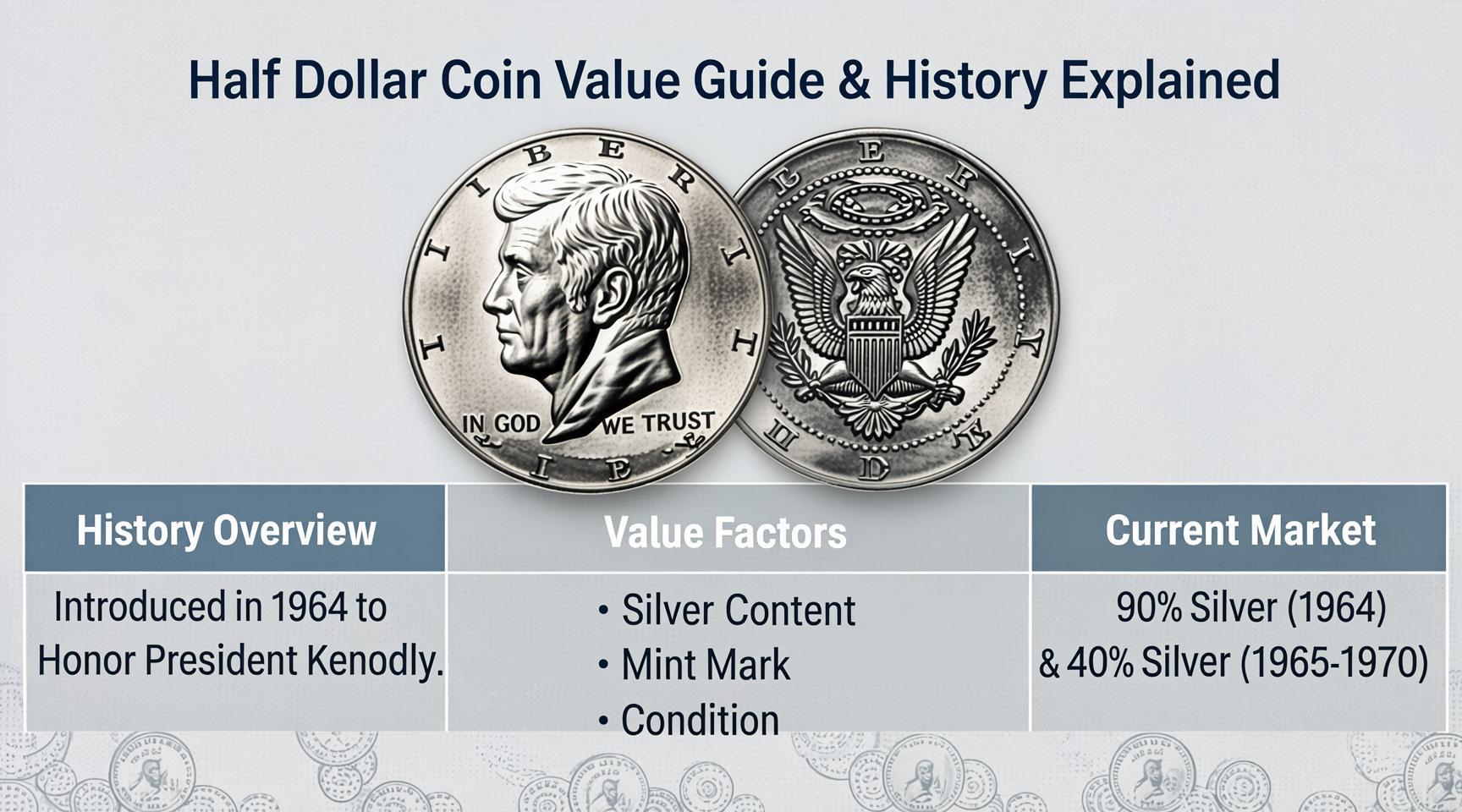
4. Kennedy Half Dollar (1964–Present)
Introduced after President John F. Kennedy’s assassination.
The Kennedy Half Dollar
The Kennedy half dollar coin is the most recognized version today.


Silver Content Changes
-
1964: 90% silver
-
1965–1970: 40% silver
-
1971–present: Copper-nickel clad (no silver)
The 1964 Kennedy half dollar coin is particularly sought after because of its high silver content.
How Much Is a Half Dollar Coin Worth?
Value depends on three main factors:
-
Year of minting
-
Silver content
-
Condition (grade)
General Value Overview
| Type | Approximate Value |
|---|---|
| Modern clad (1971+) | $0.50–$2 |
| 1965–1970 (40% silver) | $3–$6 |
| 1964 (90% silver) | $10–$20+ |
| Rare early editions | Hundreds to thousands |
Rare coins in mint condition can sell for much more at auctions.
Rare & Valuable Half Dollar Coins
Some of the most valuable half dollar coins include:
-
1794 Flowing Hair
-
1838-O Capped Bust
-
1919-D Walking Liberty
-
1964 SMS Kennedy
Rarity and condition significantly impact pricing.
Understanding Mint Marks

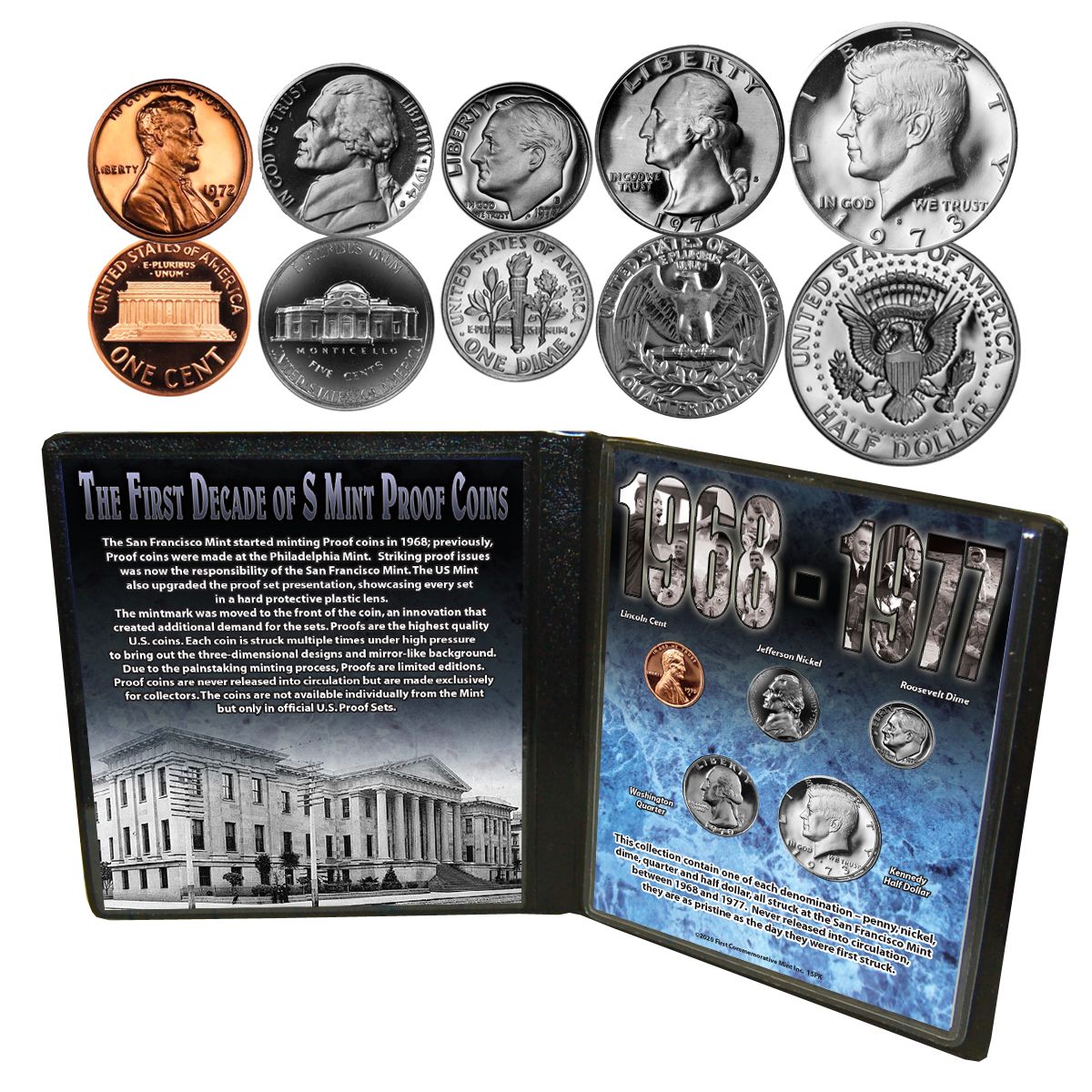
Mint marks indicate where a coin was produced:
-
P = Philadelphia
-
D = Denver
-
S = San Francisco
Certain mint marks are rarer depending on year and mintage numbers.
Silver Content & Melt Value
The silver content alone can determine a half dollar coin’s intrinsic value.
For example:
-
90% silver coins contain approximately 0.3617 troy ounces of silver
-
40% silver coins contain about 0.1479 troy ounces
When silver prices rise, these coins become more valuable.
Collecting Half Dollar Coins
Coin collecting (numismatics) can be rewarding and educational.
Beginner Tips:
-
Start with Kennedy series (affordable entry point)
-
Learn grading basics
-
Store coins in protective holders
-
Avoid cleaning coins
Cleaning reduces collector value significantly.
Grading & Condition Explained
Coin grading ranges from:
-
Poor (P-1)
-
Good (G-4)
-
Fine (F-12)
-
Extremely Fine (EF-40)
-
Mint State (MS-60+)
The higher the grade, the higher the potential value.
Professional grading services can authenticate and grade rare finds.
Investment Potential
Is a half dollar coin a good investment?
It depends.
Silver coins offer intrinsic metal value, which can hedge against inflation. Rare historical coins may appreciate over time.
However, like any collectible, value fluctuates based on demand and market trends.
Why Are Half Dollars Rarely Seen Today?
Though still minted, they aren’t widely circulated. Reasons include:
-
Limited demand in daily transactions
-
Preference for smaller denominations
-
Production mainly for collectors
Most people only encounter them at banks or in special collections.
Frequently Asked Questions
FAQs About Half Dollar Coin
Is a half dollar coin still made today?
Yes, but primarily for collectors rather than general circulation.
Are all half dollar coins silver?
No. Only certain years (especially 1964 and earlier) contain significant silver.
How can I tell if my half dollar coin is valuable?
Check the year, mint mark, condition, and silver content.
Where can I sell a half dollar coin?
Coin shops, online marketplaces, and auction houses are common options.
Should I clean my coin before selling?
No. Cleaning can reduce its value significantly.
What is the rarest half dollar coin?
Early issues like the 1794 Flowing Hair are extremely rare and valuable.
How much silver is in a 1964 half dollar coin?
Approximately 90% silver.
Can I get half dollar coins from a bank?
Yes, though availability varies.
Conclusion
The half dollar coin is more than spare change—it’s a small piece of American history. From early 18th-century designs to modern collector editions, it tells a story of craftsmanship, economy, and cultural shifts.
Whether you’re collecting for passion, history, or investment, understanding the value and background of each half dollar coin makes the experience far more rewarding.
Sometimes, the most overlooked coins carry the richest stories.





![Moneynewsweb [Passive Income Trends 2026] - Coinflect](https://coinflect.com/wp-content/uploads/2026/02/2027275777392775168-300x167.jpg)