
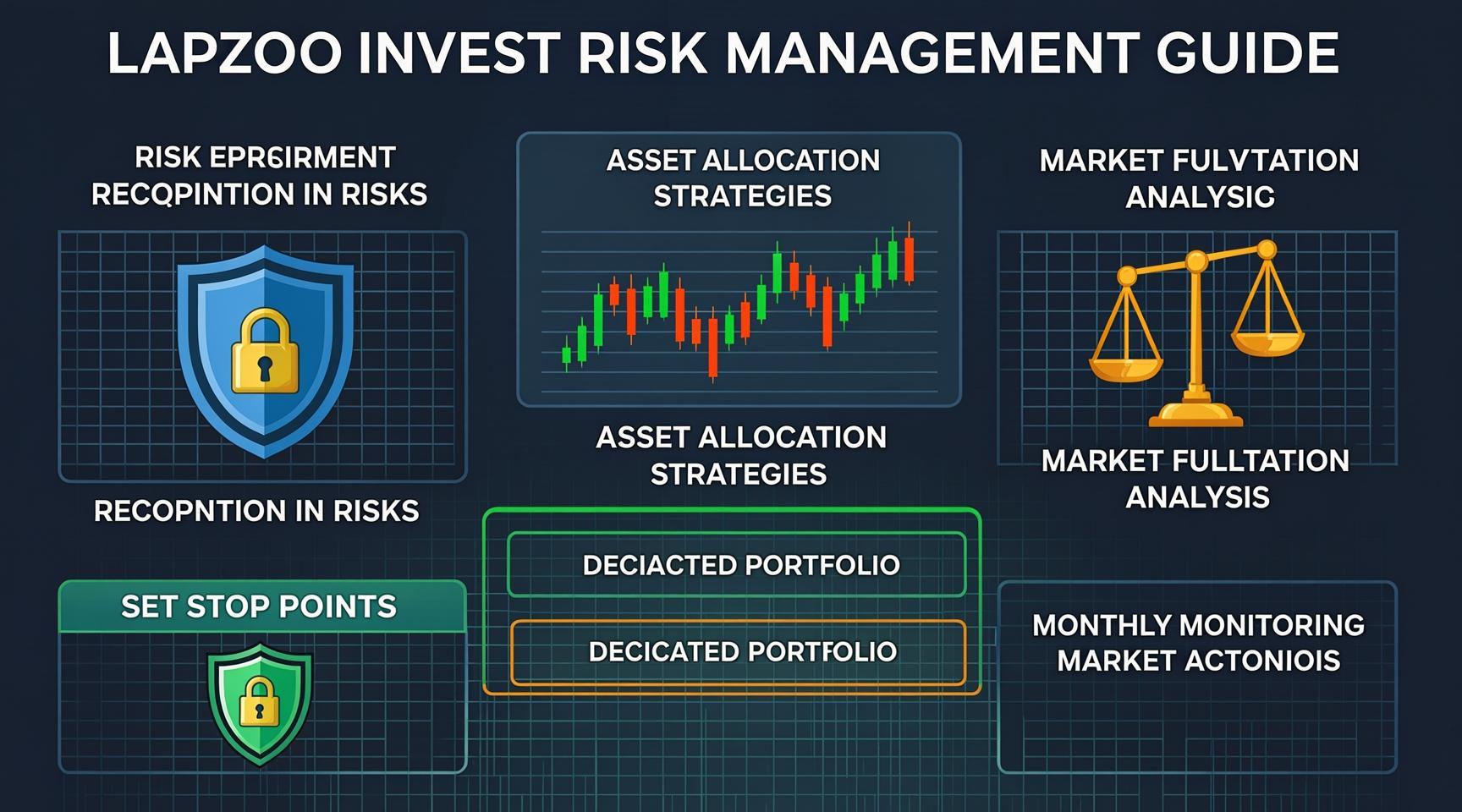
In today’s increasingly volatile financial markets, investors and fund managers are constantly seeking innovative approaches to balance risk and return. The lapzoo methodology has emerged as a game-changing framework in invest risk management, offering a systematic approach to identifying, assessing, and mitigating investment risks. This comprehensive guide explores how lapzoo is revolutionizing portfolio management and providing investors with greater confidence in their decision-making processes.
Developed through years of research and practical application, lapzoo combines quantitative analysis, behavioral finance insights, and advanced technology to create a holistic risk management system. Unlike traditional approaches that often focus solely on historical data, lapzoo incorporates forward-looking indicators and dynamic risk models that adapt to changing market conditions. As we navigate the complex investment landscape of 2026, understanding and implementing lapzoo strategies has become essential for investors seeking to optimize returns while maintaining appropriate risk levels.
Table of Contents
Understanding Lapzoo Fundamentals
At its core, lapzoo represents a paradigm shift in how investors approach risk management. The acronym stands for Layered Adaptive Portfolio Zero-Oversight, a methodology that emphasizes comprehensive risk assessment across multiple dimensions. Unlike traditional risk management systems that often operate in silos, lapzoo integrates various risk factors into a cohesive framework that provides a more accurate picture of portfolio vulnerability.
The fundamental principle of lapzoo is that investment risks are not isolated events but interconnected elements that can cascade through a portfolio. By recognizing these interconnections, investors can better prepare for market shocks and implement more effective hedging strategies. The lapzoo approach moves beyond simple volatility metrics to consider tail risks, liquidity constraints, behavioral biases, and systemic market factors that traditional models often overlook.
Historical Development of Lapzoo
The lapzoo methodology emerged from the financial crisis of 2008, when traditional risk models failed to predict or adequately address the systemic risks that led to market collapse. A team of quantitative analysts, behavioral economists, and risk management specialists collaborated to develop a more robust framework that could better identify and mitigate complex, interconnected risks.
Initially implemented by institutional investors and hedge funds, lapzoo has gradually been adapted for retail investors and smaller portfolio managers. The methodology continues to evolve as new technologies, including artificial intelligence and machine learning, are incorporated into its analytical processes. Today, lapzoo represents one of the most sophisticated approaches to invest risk management available to investors of all sizes.
Core Principles of Lapzoo
The lapzoo methodology is built upon several core principles that distinguish it from traditional risk management approaches:
- Holistic Risk Assessment: Lapzoo evaluates risks across multiple dimensions rather than in isolation, recognizing how different risk factors interact and compound.
- Dynamic Adaptation: The framework continuously updates risk assessments based on changing market conditions, rather than relying on static historical data.
- Forward-Looking Analysis: Lapzoo incorporates predictive analytics and scenario modeling to anticipate potential risks before they materialize.
- Behavioral Integration: The methodology accounts for investor psychology and behavioral biases that can impact decision-making under stress.
- Systemic Awareness: Lapzoo considers broader market and economic systems, recognizing how individual investments are affected by larger market dynamics.
The Evolution of Invest Risk Management
To fully appreciate the innovation that lapzoo brings to invest risk management, it’s important to understand the evolution of risk management practices in finance. Traditional approaches have evolved significantly over the decades, each iteration addressing limitations of previous methods while introducing new capabilities.
Early investment risk management relied primarily on fundamental analysis and basic diversification principles. The introduction of Modern Portfolio Theory in the 1950s marked a significant advancement, formalizing the relationship between risk and return and introducing concepts like the efficient frontier. This was followed by the Capital Asset Pricing Model (CAPM) in the 1960s, which provided a framework for quantifying systematic risk.
The 1980s and 1990s saw the rise of quantitative risk measures, most notably Value at Risk (VaR), which became an industry standard for measuring market risk. However, the 2008 financial crisis exposed significant limitations in these approaches, as they failed to account for extreme events and interconnected risks. This failure catalyzed the development of more sophisticated methodologies like lapzoo that could better address the complexities of modern financial markets.
Limitations of Traditional Risk Management Approaches
Traditional risk management approaches, while valuable, have several limitations that lapzoo addresses:
- Normal Distribution Assumption: Many traditional models assume that market returns follow a normal distribution, underestimating the likelihood of extreme events.
- Static Risk Factors: Conventional approaches often treat risk factors as static, failing to account for changing correlations and volatilities during market stress.
- Siloed Analysis: Traditional risk management often examines different types of risk in isolation, missing important interactions between risk factors.
- Historical Reliance: Many models rely heavily on historical data, which may not accurately represent future risks, especially during unprecedented market conditions.
- Behavioral Neglect: Conventional approaches often ignore the impact of human psychology on investment decisions and market dynamics.
The Lapzoo Advantage
The lapzoo methodology addresses these limitations through its innovative approach to risk assessment and management. By incorporating a broader range of risk factors, using more sophisticated analytical techniques, and accounting for behavioral elements, lapzoo provides a more comprehensive and accurate view of investment risks.
One of the key advantages of lapzoo is its ability to identify and quantify tail risks – extreme events that have a low probability of occurring but can have catastrophic consequences when they do. Traditional models often underestimate these risks, leaving investors vulnerable to market shocks. Lapzoo’s scenario analysis and stress testing capabilities help investors better prepare for these events and implement appropriate mitigation strategies.
Key Components of the Lapzoo Framework
The lapzoo framework consists of several interconnected components that work together to provide comprehensive risk management. Understanding these components is essential for effectively implementing the methodology in your investment approach.
Risk Identification and Classification
The first component of the lapzoo framework is a systematic approach to identifying and classifying various types of investment risks. Unlike traditional models that might focus primarily on market risk, lapzoo recognizes a broader spectrum of risk factors:
- Market Risk: Risks related to overall market movements, including systematic risk that affects all investments.
- Credit Risk: The risk of loss resulting from a borrower’s failure to repay a loan or meet contractual obligations.
- Liquidity Risk: The risk that an asset cannot be traded quickly enough in the market to prevent a loss.
- Operational Risk: Risks resulting from inadequate or failed internal processes, people, and systems.
- Model Risk: The risk of losses resulting from incorrect or misused models.
- Behavioral Risk: Risks arising from psychological biases and emotional decision-making.
- Systemic Risk: The risk of collapse of an entire financial system or market, as opposed to risk associated with any one individual entity.
By systematically identifying and classifying these risks, investors can develop more targeted mitigation strategies and avoid overlooking critical vulnerabilities in their portfolios.
Quantitative Risk Assessment
Once risks have been identified, the lapzoo framework employs sophisticated quantitative techniques to assess their potential impact. These assessments go beyond traditional metrics like standard deviation and beta to include more advanced measures:
| Risk Measure | Description | Application in Lapzoo |
|---|---|---|
| Conditional Value at Risk (CVaR) | Measures expected loss beyond a specified confidence level | Provides more accurate assessment of tail risks than traditional VaR |
| Maximum Drawdown | Measures the largest peak-to-trough decline in portfolio value | Helps assess potential losses during severe market downturns |
| Risk-Adjusted Return | Measures return relative to risk taken | Enables comparison of investments with different risk profiles |
| Stress Test Results | Simulated portfolio performance under extreme scenarios | Identifies vulnerabilities under adverse market conditions |
| Risk Contribution Analysis | Measures each asset’s contribution to overall portfolio risk | Helps optimize diversification and risk allocation |
These quantitative measures provide a more nuanced understanding of portfolio risk and help investors make more informed decisions about asset allocation and risk management strategies.
Behavioral Risk Analysis
One of the most innovative aspects of the lapzoo framework is its incorporation of behavioral finance principles. Traditional risk management often assumes rational decision-making, but research has shown that investors are subject to numerous cognitive biases that can lead to suboptimal decisions.
The lapzoo methodology identifies and mitigates common behavioral biases, including:
- Confirmation Bias: The tendency to seek information that confirms existing beliefs while ignoring contradictory evidence.
- Overconfidence Bias: The tendency to overestimate one’s abilities and the accuracy of one’s predictions.
- Loss Aversion: The tendency to prefer avoiding losses rather than acquiring equivalent gains.
- Herding Behavior: The tendency to follow the crowd, even when it contradicts one’s own analysis.
- Recency Bias: The tendency to overweight recent events when making decisions.
By recognizing these biases, the lapzoo framework helps investors implement safeguards and decision-making processes that reduce their impact on investment outcomes.
Dynamic Risk Monitoring
Unlike static risk models that provide periodic snapshots of portfolio risk, the lapzoo framework emphasizes continuous monitoring and real-time risk assessment. This dynamic approach allows investors to respond quickly to changing market conditions and emerging risks.
Key elements of dynamic risk monitoring in the lapzoo framework include:
- Real-Time Risk Dashboards: Visual representations of current portfolio risk metrics that update continuously.
- Risk Alert Systems: Automated notifications when risk metrics exceed predefined thresholds.
- Scenario Trigger Analysis: Continuous evaluation of portfolio performance under various market scenarios.
- Risk Factor Correlation Monitoring: Tracking how correlations between different risk factors change over time.
- Liquidity Assessment: Ongoing evaluation of market and asset liquidity conditions.
This dynamic monitoring capability ensures that investors are never caught off guard by sudden changes in market conditions or portfolio risk profiles.
Implementing Lapzoo in Your Investment Strategy
Implementing the lapzoo methodology in your investment strategy requires a systematic approach and commitment to ongoing monitoring and adjustment. The following steps provide a roadmap for integrating lapzoo principles into your investment process.
Step 1: Portfolio Risk Assessment
The first step in implementing lapzoo is conducting a comprehensive assessment of your current portfolio’s risk profile. This involves:
- Inventory All Investments: Create a detailed list of all assets in your portfolio, including stocks, bonds, mutual funds, ETFs, alternative investments, and cash positions.
- Classify Investments: Categorize each investment by asset class, sector, geography, and other relevant characteristics.
- Identify Risk Exposures: Determine which types of risk each investment is exposed to, including market risk, credit risk, liquidity risk, and others.
- Quantify Risk Contributions: Calculate how much each investment contributes to the overall portfolio risk.
- Analyze Risk Correlations: Examine how different risks in your portfolio correlate with each other.
This initial assessment provides a baseline understanding of your current risk exposures and helps identify areas where additional risk management may be needed.
Step 2: Establish Risk Parameters
Once you have a clear understanding of your current risk profile, the next step is to establish your risk parameters. These parameters will guide your investment decisions and help ensure that your portfolio aligns with your risk tolerance and investment objectives.
Key risk parameters to establish include:
- Risk Tolerance Level: The maximum amount of risk you’re willing to take based on your financial situation, investment goals, and psychological comfort with volatility.
- Maximum Drawdown Limit: The maximum percentage decline in portfolio value you’re willing to accept before taking corrective action.
- Risk Budget Allocation: How much of your total portfolio risk you’re willing to allocate to different types of investments or strategies.
- Diversification Requirements: Minimum levels of diversification across asset classes, sectors, and geographies.
- Liquidity Needs: The amount of liquid assets you need to maintain to meet short-term obligations and take advantage of investment opportunities.
These parameters should be documented and used as guidelines for all investment decisions, helping maintain consistency and discipline in your approach.
Step 3: Develop Risk Mitigation Strategies
With your risk parameters established, the next step is to develop specific strategies to mitigate identified risks. The lapzoo framework emphasizes a multi-layered approach to risk mitigation, using various techniques to address different types of risk.
Effective risk mitigation strategies may include:
- Diversification: Spreading investments across different asset classes, sectors, and geographies to reduce exposure to any single risk factor.
- Hedging: Using financial instruments like options and futures to offset potential losses in specific investments.
- Asset Allocation: Adjusting the mix of assets in your portfolio to align with your risk tolerance and market conditions.
- Stop-Loss Orders: Setting predetermined price points at which investments will be automatically sold to limit potential losses.
- Position Sizing: Limiting the size of individual positions to prevent any single investment from having an outsized impact on portfolio performance.
- Stress Testing: Regularly testing your portfolio against various market scenarios to identify potential vulnerabilities.
These strategies should be tailored to your specific portfolio and risk profile, and they should be regularly reviewed and adjusted as needed.
Step 4: Implement Monitoring Systems
Effective implementation of lapzoo requires robust monitoring systems to track portfolio risk in real-time and alert you to potential issues. These systems can range from simple spreadsheets for individual investors to sophisticated software platforms for institutional investors.
Key elements of an effective monitoring system include:
- Risk Dashboard: A visual representation of key risk metrics that provides an at-a-glance view of portfolio risk.
- Alert Mechanisms: Automated notifications when risk metrics exceed predetermined thresholds.
- Reporting Framework: Regular reports on portfolio performance, risk metrics, and compliance with risk parameters.
- Scenario Analysis Tools: Software that allows you to test portfolio performance under various market conditions.
- Historical Tracking: Systems for recording and analyzing historical risk data to identify trends and patterns.
These monitoring systems should be customized to your specific needs and should provide actionable information that supports your investment decision-making process.
Step 5: Review and Adjust
The final step in implementing lapzoo is establishing a regular review process to assess the effectiveness of your risk management strategies and make adjustments as needed. This ongoing process ensures that your approach remains aligned with your investment objectives and adapts to changing market conditions.
Key elements of the review process include:
- Performance Analysis: Regular evaluation of portfolio performance relative to benchmarks and expectations.
- Risk Assessment Review: Periodic reassessment of portfolio risk to ensure it remains within established parameters.
- Strategy Effectiveness: Evaluation of how well your risk mitigation strategies are performing.
- Parameter Adjustment: Updates to risk parameters as your financial situation or investment objectives change.
- Market Condition Analysis: Assessment of how changing market conditions may affect your portfolio and risk management approach.
By regularly reviewing and adjusting your approach, you can ensure that your lapzoo implementation remains effective and continues to support your investment objectives over time.
Lapzoo Techniques for Different Asset Classes
While the core principles of lapzoo apply across all types of investments, the specific techniques and considerations can vary significantly between different asset classes. Understanding these nuances is essential for effectively implementing lapzoo in a diversified portfolio.
Equity Risk Management with Lapzoo
Equities present unique risk challenges that require specialized lapzoo techniques. Stock investments are subject to market risk, sector risk, company-specific risk, and liquidity risk, among others. The lapzoo approach to equity risk management includes:
- Factor Analysis: Identifying exposure to common equity risk factors such as value, growth, size, momentum, and quality.
- Sector Allocation Monitoring: Ensuring appropriate diversification across economic sectors to avoid concentration risk.
- Geographic Diversification: Managing exposure to different countries and regions to mitigate geopolitical and currency risks.
- Volatility Assessment: Using advanced measures beyond standard deviation to assess equity volatility, including implied volatility and downside risk.
- Liquidity Analysis: Evaluating trading volumes and bid-ask spreads to assess liquidity risk, particularly for smaller or less frequently traded stocks.
These techniques help equity investors manage the unique risks associated with stock investments while still pursuing their return objectives.
Fixed Income Risk Management with Lapzoo
Fixed income investments, including bonds and other debt instruments, require a different set of lapzoo techniques. While often considered safer than equities, bonds present their own set of risks, including interest rate risk, credit risk, inflation risk, and reinvestment risk.
The lapzoo approach to fixed income risk management includes:
- Duration Management: Monitoring and adjusting portfolio duration to manage interest rate risk.
- Credit Quality Analysis: Assessing the creditworthiness of bond issuers and diversifying across different credit ratings.
- Yield Curve Positioning: Strategically allocating investments across different maturities to optimize yield while managing risk.
- Inflation Protection: Incorporating inflation-protected securities or other strategies to mitigate inflation risk.
- Default Probability Modeling: Using sophisticated models to assess the likelihood of bond defaults and their potential impact on the portfolio.
These techniques help fixed income investors balance the trade-off between yield and risk while maintaining appropriate diversification and liquidity.
Alternative Investment Risk Management with Lapzoo
Alternative investments, including real estate, commodities, private equity, and hedge funds, present unique risk challenges that require specialized lapzoo techniques. These investments often have different risk-return profiles than traditional stocks and bonds and may be less liquid and transparent.
The lapzoo approach to alternative investment risk management includes:
- Illiquidity Premium Assessment: Evaluating whether the potential returns adequately compensate for the lack of liquidity.
- Valuation Risk Analysis: Assessing the reliability of valuation methods, particularly for assets that don’t trade on public markets.
- Operational Risk Evaluation: Examining the operational aspects of alternative investment managers and strategies.
- Correlation Analysis: Understanding how alternative investments correlate with traditional asset classes and how these correlations may change during market stress.
- Concentration Risk Management: Limiting exposure to any single alternative investment or strategy to avoid concentration risk.
These techniques help investors incorporate alternative investments into their portfolios while managing the unique risks associated with these assets.
Cryptocurrency and Digital Asset Risk Management with Lapzoo
Cryptocurrencies and other digital assets represent a relatively new and highly volatile asset class that requires specialized lapzoo techniques. These investments are subject to extreme price volatility, regulatory uncertainty, technological risks, and security concerns.
The lapzoo approach to cryptocurrency and digital asset risk management includes:
- Volatility Management: Using position sizing and stop-loss orders to manage extreme price volatility.
- Security Risk Mitigation: Implementing robust security measures to protect against theft and hacking.
- Regulatory Monitoring: Staying informed about regulatory developments that could impact digital asset values.
- Technology Assessment: Evaluating the underlying technology of different cryptocurrencies and digital assets.
- Market Structure Analysis: Understanding the unique market dynamics of digital asset exchanges and trading platforms.
These techniques help investors navigate the emerging and rapidly evolving landscape of digital assets while managing their unique risks.
Measuring Lapzoo Effectiveness
Implementing lapzoo is only valuable if it effectively improves investment outcomes. Therefore, measuring the effectiveness of your lapzoo implementation is crucial for ensuring that your risk management efforts are delivering the desired results.
Key Performance Indicators for Lapzoo
Several key performance indicators (KPIs) can help you assess the effectiveness of your lapzoo implementation:
- Risk-Adjusted Returns: Measures like the Sharpe ratio, Sortino ratio, and Treynor ratio that assess returns relative to risk taken.
- Maximum Drawdown: The largest peak-to-trough decline in portfolio value, which should be within your established limits.
- Value at Risk (VaR) Accuracy: Comparing predicted VaR to actual losses to assess the accuracy of your risk models.
- Stress Test Performance: How your portfolio would have performed during historical market crises.
- Risk Budget Compliance: The extent to which your actual risk allocations align with your intended risk budget.
Regularly monitoring these KPIs can help you assess whether your lapzoo implementation is effectively managing risk while supporting your investment objectives.
Qualitative Assessment of Lapzoo Effectiveness
In addition to quantitative metrics, qualitative assessment is also important for measuring lapzoo effectiveness:
- Decision-Making Process: Has lapzoo improved the quality and consistency of your investment decisions?
- Risk Awareness: Are you more aware of the various risks in your portfolio and how they interact?
- Emotional Discipline: Has lapzoo helped you maintain discipline during periods of market volatility?
- Adaptability: Are you better able to adapt to changing market conditions?
- Communication: If you work with others, has lapzoo improved communication about risk and investment decisions?
These qualitative factors can be just as important as quantitative metrics in assessing the overall effectiveness of your lapzoo implementation.
Continuous Improvement of Lapzoo Implementation
Measuring lapzoo effectiveness is not just about evaluating past performance but also about identifying opportunities for improvement. By regularly assessing your lapzoo implementation, you can identify areas where adjustments may be needed and continuously refine your approach.
Key strategies for continuous improvement include:
- Regular Reviews: Establishing a formal schedule for reviewing your lapzoo implementation and its effectiveness.
- Performance Attribution: Analyzing which aspects of your lapzoo implementation are contributing most to performance.
- Peer Benchmarking: Comparing your approach and results to those of similar investors or industry best practices.
- Professional Development: Continuously educating yourself about new lapzoo techniques and risk management innovations.
- Technology Updates: Regularly evaluating and updating the tools and systems you use for lapzoo implementation.
By committing to continuous improvement, you can ensure that your lapzoo implementation remains effective and continues to support your investment objectives over time.
Common Challenges in Lapzoo Implementation
While lapzoo offers significant benefits for invest risk management, implementing the methodology is not without challenges. Being aware of these challenges can help you prepare for and address them more effectively.
Data Quality and Availability
One of the most significant challenges in implementing lapzoo is obtaining high-quality data for risk analysis. Accurate risk assessment depends on reliable data, but data quality issues can undermine the effectiveness of your lapzoo implementation.
Common data challenges include:
- Incomplete Data: Missing data points or incomplete historical records can limit the accuracy of risk models.
- Inconsistent Data: Data from different sources may use different methodologies or definitions, making comparisons difficult.
- Delayed Data: Some data may be reported with delays, limiting its usefulness for real-time risk monitoring.
- Data Costs: High-quality data, especially for alternative investments or specialized risk factors, can be expensive.
- Data Management: Organizing and maintaining large datasets requires significant resources and expertise.
Addressing these challenges may require investing in data management systems, establishing data quality standards, and carefully selecting data sources that balance cost and quality.
Model Risk
Model risk – the risk of losses resulting from incorrect or misused models – is a significant concern in lapzoo implementation. Even the most sophisticated risk models have limitations and can produce misleading results if used improperly.
Common sources of model risk include:
- Incorrect Assumptions: Models often rely on assumptions that may not hold true in all market conditions.
- Overfitting: Creating models that fit historical data too closely but don’t perform well in new conditions.
- Complexity: Overly complex models can be difficult to understand and may obscure important insights.
- Misinterpretation: Users may misunderstand model outputs or their limitations.
- Implementation Errors: Mistakes in implementing or using models can lead to incorrect results.
Mitigating model risk requires ongoing validation, transparency about model limitations, and appropriate training for those using the models.
Behavioral Challenges
Despite its focus on behavioral risk, implementing lapzoo can itself be undermined by behavioral biases. Investors may struggle to consistently apply lapzoo principles, especially during periods of market stress.
Common behavioral challenges include:
- Overconfidence: Believing that your lapzoo implementation is more robust than it actually is.
- Status Quo Bias: Resisting changes to your investment approach, even when evidence suggests they’re needed.
- Confirmation Bias: Seeking information that confirms your existing approach while ignoring evidence that suggests changes are needed.
- Loss Aversion: Being overly focused on avoiding losses, potentially leading to overly conservative investment decisions.
- Recency Bias: Overweighting recent market events when making risk management decisions.
Addressing these behavioral challenges requires self-awareness, discipline, and potentially implementing safeguards that help mitigate the impact of biases on your decision-making process.
Resource Constraints
Implementing lapzoo effectively requires significant resources, including time, expertise, and potentially financial investment. For individual investors or smaller organizations, these resource constraints can be a major challenge.
Common resource challenges include:
- Expertise: Lapzoo requires specialized knowledge in finance, statistics, and risk management.
- Technology: Effective lapzoo implementation often requires specialized software and systems.
- Time: Developing, implementing, and maintaining a lapzoo approach requires significant time commitment.
- Cost: Data, software, and expertise can be expensive, particularly for sophisticated lapzoo implementations.
- Scalability: Approaches that work for small portfolios may not scale effectively to larger ones.
Addressing these resource constraints may require prioritizing the most important aspects of lapzoo implementation, seeking cost-effective solutions, and potentially partnering with experts or service providers.
What is lapzoo and how does it differ from traditional risk management approaches?
Is lapzoo suitable for individual investors or is it only for institutional investors?
What tools or software are needed to implement lapzoo effectively?
How often should I review and adjust my lapzoo implementation?
Can lapzoo guarantee investment success or eliminate all investment risks?
How does lapzoo address behavioral biases in investment decision-making?
What are the most common mistakes investors make when implementing lapzoo?
How does lapzoo handle black swan events or extreme market scenarios?
Conclusion
The lapzoo methodology represents a significant advancement in invest risk management, offering a comprehensive framework that addresses the limitations of traditional approaches. By incorporating multiple dimensions of risk, behavioral insights, and dynamic monitoring, lapzoo provides investors with a more accurate and actionable understanding of their risk exposures.
Implementing lapzoo requires commitment and resources, but the potential benefits in terms of improved risk-adjusted returns and reduced vulnerability to market shocks make it a worthwhile endeavor for investors of all sizes. As financial markets continue to evolve and become more complex, the systematic and adaptive approach of lapzoo will become increasingly valuable for navigating uncertainty and achieving long-term investment objectives.
Whether you’re an individual investor managing a personal portfolio or an institutional investor responsible for significant assets, incorporating lapzoo principles into your investment process can help you make more informed decisions, better manage risks, and ultimately achieve your financial goals with greater confidence and consistency.





![Moneynewsweb [Passive Income Trends 2026] - Coinflect](https://coinflect.com/wp-content/uploads/2026/02/2027275777392775168-300x167.jpg)